High-Risk PCIs (Coronary Stents)

Patients with higher-risk coronary conditions will need appropriate treatment. In these cases, we may recommend high-risk percutaneous coronary interventions to mitigate these risks and achieve improved heart function.

What Is High-Risk Percutaneous Coronary Intervention?

High-risk percutaneous coronary intervention (PCI) is a procedure performed for patients with complex conditions. For example, a target patient may have comorbidities (multiple conditions) that require a unique approach for a positive outcome. These interventions can involve coronary stents or a mechanical circulatory support device.

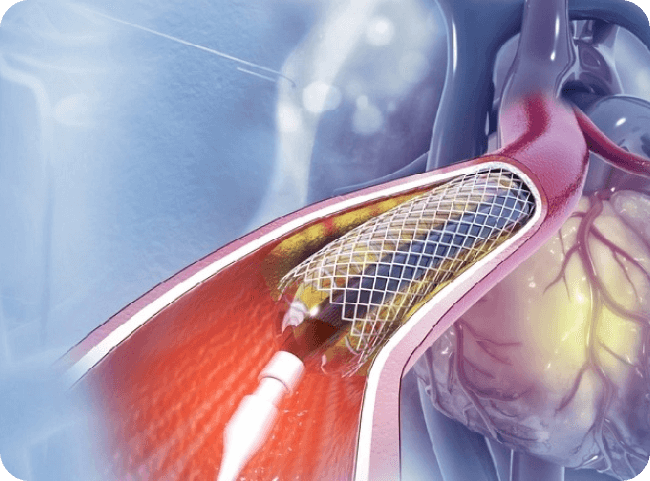
A coronary stent PCI involves placing a small structure (the stent) that opens up heart blood vessels. This helps improve blood flow in patients whose blood vessels have reduced flow due to plaque buildup (atherosclerosis). The stent is placed via a catheter to minimize the risk of damage to the surrounding structures.

Who Needs a High-Risk Percutaneous Coronary Intervention?

High-risk PCIs are performed for patients with high-risk conditions for whom a basic intervention may not provide adequate support. These include:
Illustration of cross section of a blood vessel leading to heart
  • Complex Coronary Artery Disease
  • Hemodynamic Compromise (e.g., poor heart function)
  • Clinical Comorbidities (e.g., diabetes, kidney disease, stroke, advanced age, heart failure)
  • Hemodynamically Unstable Characteristics (e.g., cardiogenic shock)
  • Challenging Plaque Types (e.g., calcified or long lesions)

Are There Risks?

While these interventions carry some degree of risk, the risk of not having them is far more certain and concerning. We perform a comprehensive evaluation for each patient before recommending a high-risk PCI, moving forward only when the benefits far outweigh potential risks, such as:

  • Vascular Complications: Bleeding, anemia, or the need for emergency vascular surgery.
  • Stent Thrombosis: Formation of a blood clot in or near the placed stent.
  • Myocardial Damage: Typically occurs only if ischemia is prolonged or the procedure is unsuccessful.

Learn About Your Treatment Options

Contact United Heart Institute today to work with experienced heart doctors in the Inland Empire. Our practitioners are known for their skill, success, and focus on patient safety. With every high-risk PCI, we take every precaution to provide positive clinical outcomes for our patients.
Connect With Us Today

*If you are experiencing a medical emergency,
please dial 911 immediately.

United Heart Institute

Phone icon

Phone/Fax
Phone: 909.500.8683
Fax: (909) 931-1294

Location icon

Location
685 North 13th Avenue, Upland
California 91786, United States

California

685 North 13th Avenue Upland, California 91786, USA