
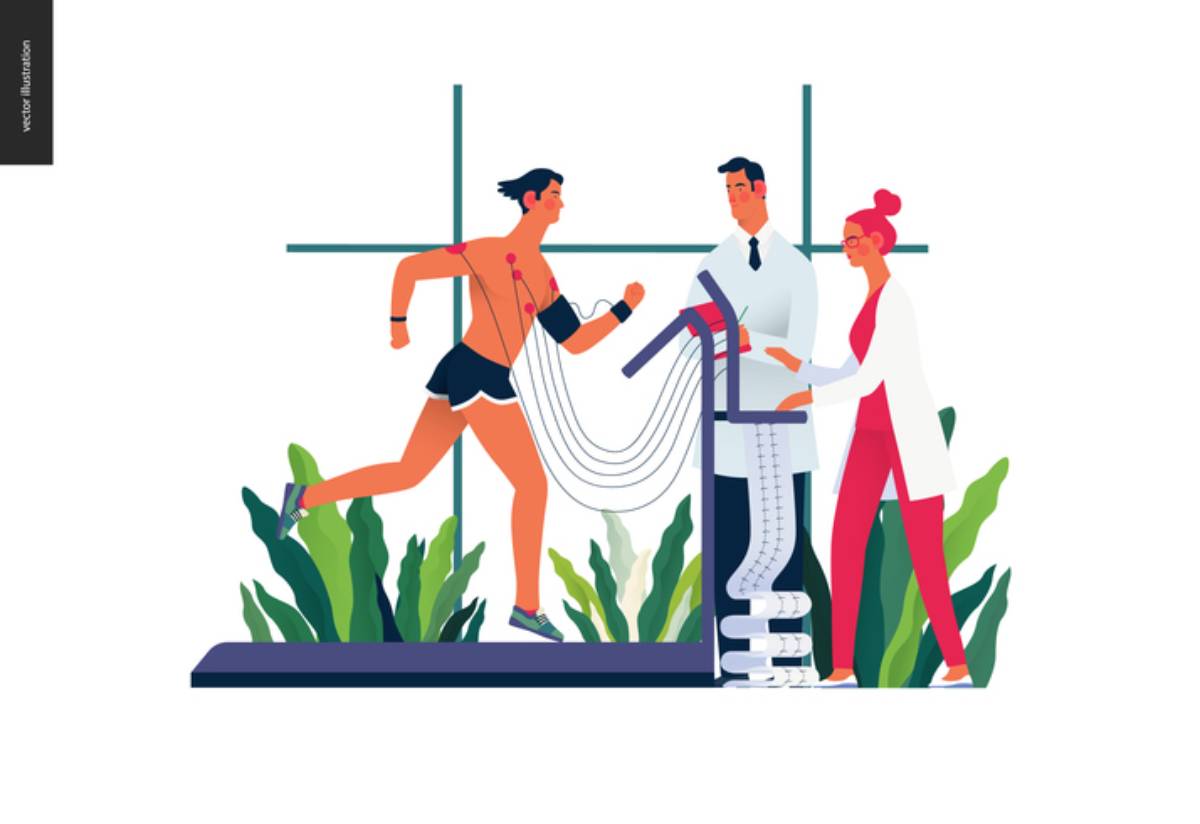
The goal of a stress test is to reveal how well your heart pumps blood at a higher workload. Also known as a stress test or treadmill test, it evaluates your heart’s response to various levels of physical exertion.
Stress tests should not be feared; they are simply a tool to help those with cardiovascular health problems. Once the test is performed and doctors have a better understanding of an individual’s condition, patients can receive the specific care they need.
The Purpose of a Stress Test
The purpose of a stress test is to determine if a patient has a heart problem. Doctors use stress tests to identify the cause of symptoms related to heart issues. Others refer to a stress test as an exercise stress test, treadmill test, stress EKG, nuclear stress test, or stress echocardiogram.
A consultation meeting with your doctor will help determine if you qualify for the test. Doctors perform a physical exam, review your medical history, and check for any pertinent symptoms.
The Process of a Stress Test
A stress test helps rule out or diagnose certain heart conditions. Some of the heart conditions, per the National Library of Medicine, may include:
- Angina
- Heart valve diseases
- Arrythmia
- Coronary artery disease (CAD)
- Heart failure
- Cardiomyopathy
A stress test can inform doctors of how severe your heart condition is and help them decide which treatment option is best for your individual health concern. Thankfully, stress tests check the following:
- Blood pressure
- Blood flow in the heart
- Strength of electrical signals controlling the heartbeat
- Rate and rhythm of the heartbeat
During a stress test, a blood pressure cuff will be placed on your arm to monitor blood pressure. From there, you will be required to ride a stationary bicycle or walk on a treadmill. As you continue, doctors may raise the treadmill’s incline, tilting it to simulate walking up a hill.
The treadmill speed will slowly increase. On the stationary bike, resistance will increase slowly. This makes it more difficult to pedal. The exercises you need to perform will take 10-15 minutes.
The goal is to reach your target heart rate, which is determined by your fitness level and age. However, you can stop the exercise sooner if you experience dizziness or chest pain. If an EKG shows a problem with your heart, doctors will stop the test.
The Results of a Stress Test
To determine the results of a stress test, doctors must first learn if you are a candidate for the test. If you suffer from any of the following symptoms, you may need a stress test:
- Shortness of breath
- Irregular heartbeat
- Chest pain
- Dizziness
- Fainting
- Lightheadedness
- Rapid heartbeat
Additionally, individuals may need to check their heart health under the following circumstances:
- You are going to have surgery
- You currently have a heart condition
- You plan to begin an exercise program
- You are currently being treated for heart disease
- You have a high risk of developing heart disease
Patients who participate in a stress test will likely learn results quickly, sometimes the same day as the test. Although results can vary from person to person, a normal test indicates that your heart is working properly and that no blood flow issues were detected.
An abnormal test result may signal that you have heart disease. Your doctor will go over the condition with you. Depending on the condition, additional tests may be needed.
Schedule a Stress Test Today
For those concerned about their heart health, consider a stress test. At United Heart Institute, we offer a heart health clinic to help those seeking cardiovascular treatment.
Our team of experts will assist you throughout the stress test process. Contact us today to speak with a doctor and schedule a stress test.


